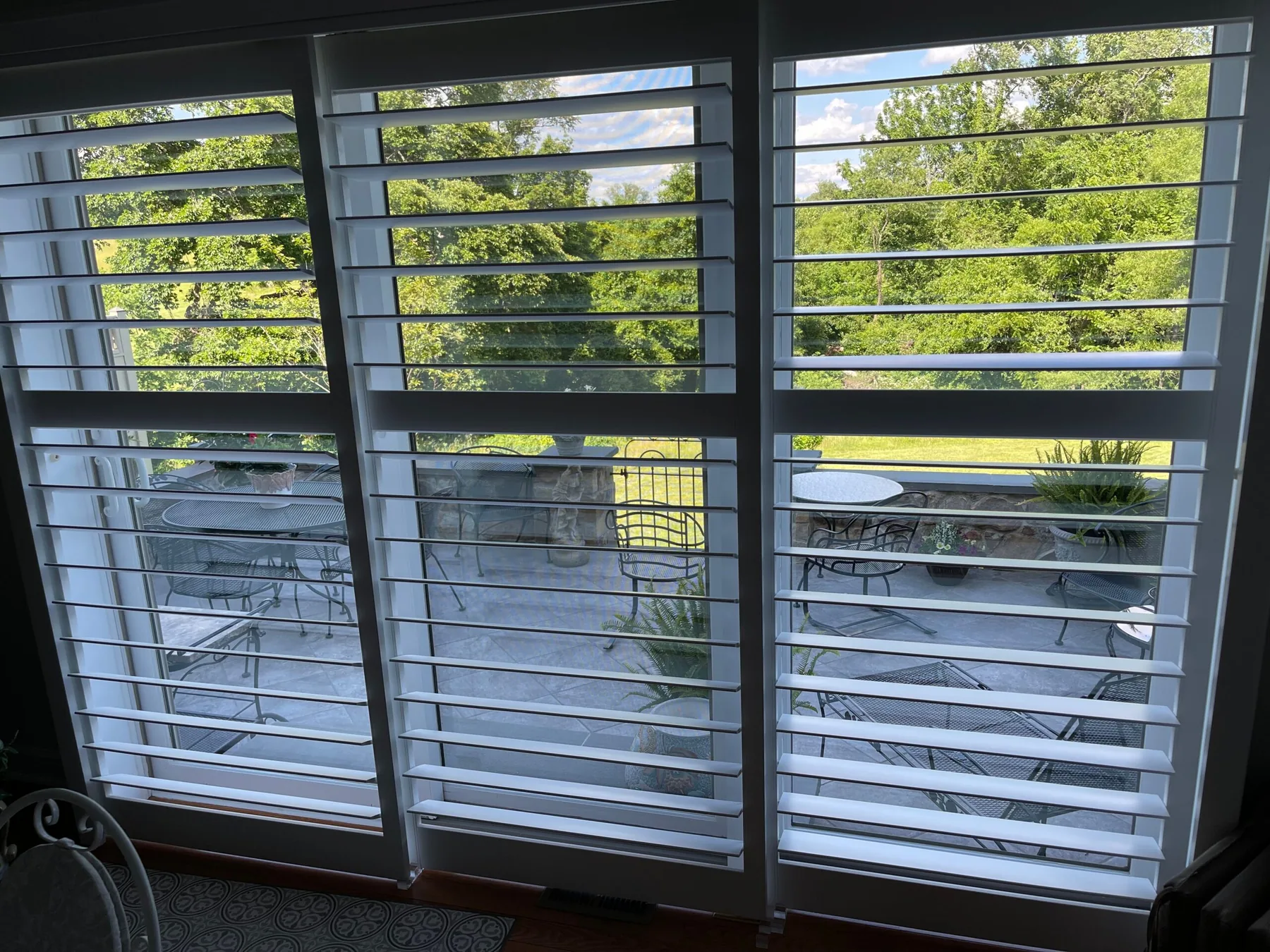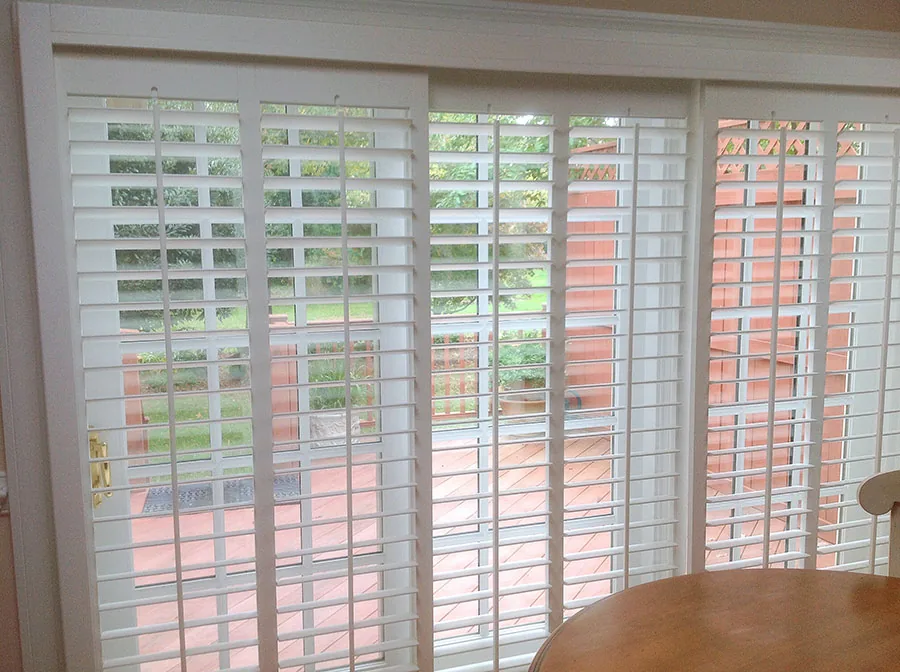
Keep a clear path to the patio
Bypass shutter panels move along a track in front of the glass. The number of panels and where they overlap affect the opening you can use. We plan the layout around your door and check where the panels will sit when open.
Our sliding glass door shutters are built to your measurements in our Richmond workshop and installed by the Shenandoah team, for patio and deck doors in homes across Virginia, Maryland, and Washington DC.
Features
Bypass track system
Panels slide past one another on a track. The layout accounts for door access and the space needed to stack the panels.
Full-width coverage
The shutter system covers the entire door width for a consistent look.
Privacy and light control
Adjustable louvers provide the same privacy and daylight control as standard shutters.
How bypass shutters work on a sliding glass door
Sliding shutter panels ride on a track in front of the glass and move sideways, the same way the door does. Each panel slides past the one beside it, so nothing swings into the room and furniture can sit close to the door. We plan where the panels stack when open so the side you walk through stays clear.
Because the panels overlap, part of the glass stays covered when the shutters are open. How much depends on the width of the door and the number of panels. We show you the open position during the consultation, before you settle on a layout.
Bypass, bi-fold, or hinged panels?
Three panel arrangements come up when homeowners compare shutters for sliding doors:
Bypass panels on a track
This is how we build sliding door shutters. The panels slide on a track in front of the glass and leave the floor in front of the door free.
Bi-fold panels
Bi-fold panels are hinged together and fold to the side of the opening, which uncovers more glass but needs clear wall space beside the door. We review bypass and bi-fold layouts for wide door wall shutters and floor-to-ceiling glass.
Hinged panels
Hinged panels swing into the room, so the floor in front of the glass has to stay clear each time you open them. On a swinging door they work differently: our French door shutters attach to the doors and move with them.
Light control and privacy
The louvers on sliding panels tilt just like those on our plantation shutters for windows. Angle them to soften afternoon glare, close them for privacy at night, or open them for the view to the patio. Moving a panel to the side opens that part of the glass completely.
We offer 2.5", 3.5", and 4.5" louvers. Compare plantation shutter louver sizes at the door itself, because the track depth and the louver movement are planned together. You can also ask about a divider rail, which lets you set the upper and lower louvers differently, and about a center or hidden tilt rod. We confirm which of these suit your panels when we measure.
Clearing the door handle
The handle on a sliding glass door stands out from the glass, and the shutter panels pass in front of it every time they open. We measure the handle projection, the lock, and the door frame, then plan the track position and panel depth so the panels and louvers move past the hardware and you can still reach the handle. The floor, threshold, and trim around the opening are checked at the same visit.
Measuring and installation
Sliding door shutters start with a free in-home consultation. We measure the opening, bring paint and stain samples, and walk through where the panels will sit open and closed. You receive a detailed written quote. Once you approve the design, the shutters are built in Richmond and installed by our own team. Timing depends on the size of the project and the finish; see how long plantation shutter installation takes for what to expect.
Sliding door shutters vs. vertical blinds
Vertical blinds are a common choice for sliding glass doors. Their vanes hang from a headrail, turn to adjust light, and draw to one side, so they can uncover more of the glass than overlapping shutter panels. Bypass plantation shutters keep some glass covered when open, but they give the door hardwood panels in a paint or stain finish that can match the shutters on your windows, with louvers you tilt instead of separate hanging vanes.
Compare both at the door: where the treatment sits when open, how you adjust it, and how it looks from the rest of the room. Our plantation shutters vs. blinds guide covers the same questions for windows.